
Editorial Team · on 15 June 2026 · 7 min read · Last reviewed 15 June 2026
Fine art appreciation is the practice of understanding, analyzing, and engaging with visual art to derive meaning, context, and aesthetic pleasure.
01Key facts
- Fine art appreciation combines visual analysis, historical context, and cultural critique.
- The Renaissance period (14th to 17th century) is a foundational era for Western art appreciation.
- Color theory, composition, and technique are core elements in analyzing fine art.
- Major museums like the Louvre and the Metropolitan Museum of Art house thousands of masterpieces for public appreciation.
02What does fine art appreciation involve?
Fine art appreciation requires a multifaceted approach, blending visual analysis with historical and cultural understanding. When examining a piece of art, start with formal elements like color, line, and composition. For instance, Vincent van Gogh’s Starry Night uses swirling, expressive brushstrokes to convey motion and emotion, a technique that defines his Post-Impressionist style. Beyond visual elements, consider the artwork’s historical context. A painting like Pablo Picasso’s Guernica gains deeper meaning when viewed through the lens of the Spanish Civil War, which it depicts.
Cultural and social influences also play a crucial role. For example, Frida Kahlo’s self-portraits reflect her personal experiences and Mexican identity, offering insights into both her life and the broader cultural movements of her time. Additionally, understanding the artist’s intent—whether to provoke, inspire, or document—enhances appreciation. Art appreciation is not just about recognizing beauty; it’s about deciphering the layers of meaning embedded in each piece.
03How do you analyze a masterpiece?
Analyzing a masterpiece begins with a close examination of its formal qualities. Look at the use of color, light, and shadow. Caravaggio’s The Calling of St. Matthew employs chiaroscuro, a dramatic contrast between light and dark, to highlight the moment of divine revelation. Next, consider the composition—the arrangement of elements within the artwork. Leonardo da Vinci’s Mona Lisa uses pyramid-shaped composition to draw focus to the subject’s enigmatic smile.
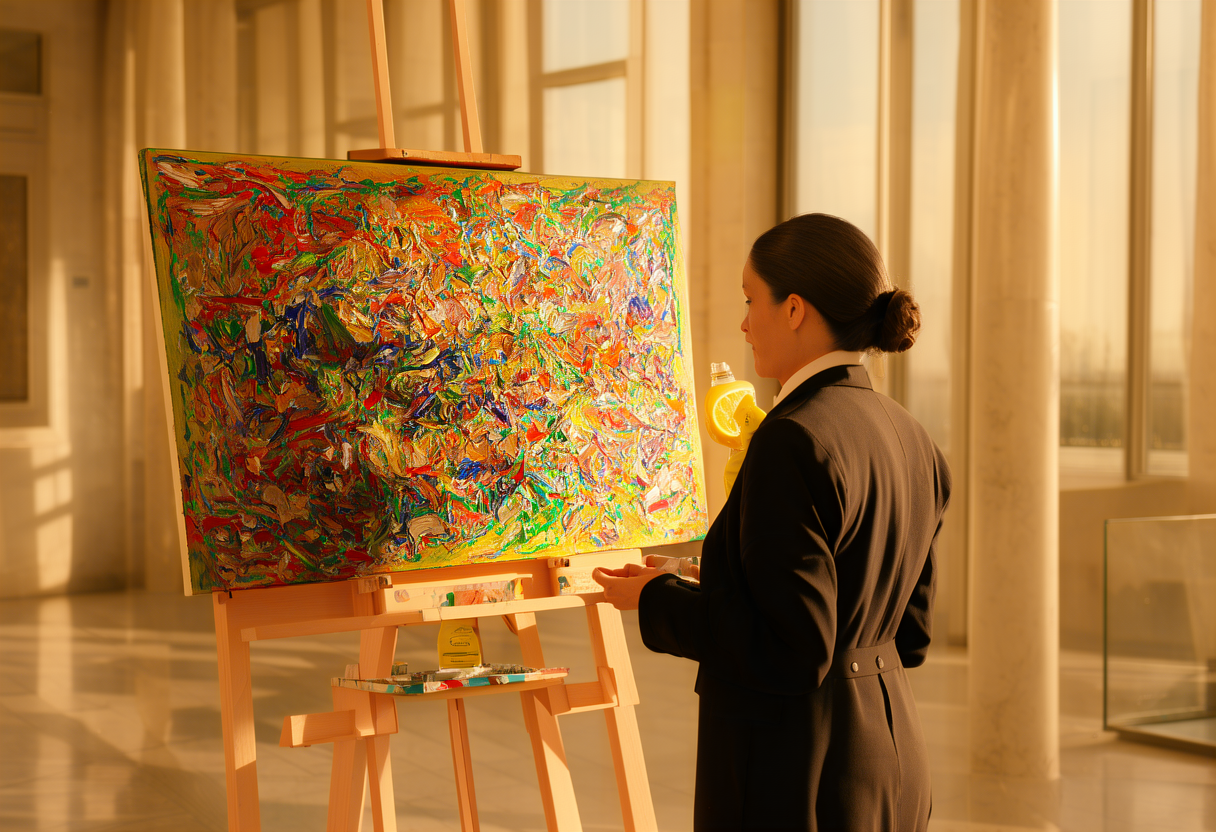
Technique is another critical factor. Jackson Pollock’s drip paintings revolutionized abstract expressionism by abandoning traditional brushwork in favor of action painting. Understanding these techniques helps you appreciate the artist’s skill and innovation. Contextual research is essential. For example, Sandro Botticelli’s The Birth of Venus reflects Renaissance ideals of beauty and mythology, which were central to the cultural values of Florence during his time. By combining formal analysis with historical and cultural research, you gain a holistic understanding of the artwork’s significance.
04What role does history play in fine art appreciation?
History is the backbone of fine art appreciation, providing the framework to understand why and how artworks were created. Art movements like Baroque, Romanticism, and Surrealism are defined by their historical contexts. The Baroque period, for example, emerged in 17th-century Europe during a time of religious and political upheaval, with artists like Rembrandt using dramatic lighting and dynamic compositions to convey emotion and tension.
Understanding the historical context helps you appreciate the evolution of art. The Impressionist movement, led by artists like Claude Monet, challenged traditional academic styles by focusing on light and everyday subjects. This shift marked a turning point in art history, paving the way for modern art. For deeper insights, explore the History of Art Appreciation: How Perspectives Have Evolved and Art History and Appreciation: Bridging Context and Critique.
05How do museums contribute to fine art appreciation?
Museums are vital to fine art appreciation, offering direct access to masterpieces and curated exhibits that provide context. Institutions like the Louvre in Paris and the Metropolitan Museum of Art in New York house vast collections spanning centuries and cultures. For example, the Louvre’s Mona Lisa is displayed with information about its creation, restoration, and cultural impact, allowing visitors to engage with the artwork on multiple levels.
Temporary exhibitions often focus on specific themes or artists, offering fresh perspectives. The British Museum’s exhibitions on ancient civilizations, for instance, combine artifacts with educational materials to enhance understanding. Museums also host lectures, workshops, and guided tours, providing opportunities for deeper learning. For more on how museums bridge history and appreciation, see Museum Collections and Art History.
Think of fine art appreciation like learning a new language. Just as you study grammar and vocabulary to communicate, you analyze color, composition, and context to “read” an artwork. The more you practice, the more fluent you become in understanding and enjoying art.
06What are the key steps to improve fine art appreciation?
- Visit museums and galleries regularly to expose yourself to diverse artworks.
- Read books and articles on art history and theory to build foundational knowledge.
- Take notes on artworks that resonate with you, analyzing their elements and emotions.
- Engage in discussions or join art appreciation groups to exchange insights.
- Practice sketching or painting to develop a hands-on understanding of techniques.
07How can beginners start appreciating fine art?
Beginners can start by focusing on what they find visually appealing. Choose a few artworks that catch your eye and research their backgrounds. Look for patterns in your preferences—do you gravitate toward landscapes, portraits, or abstract works? For example, if you enjoy the vibrant colors of Henri Matisse’s The Dance, explore other Fauvist artists who use bold, expressive hues.
Attend local art exhibitions or virtual tours offered by major museums. Many institutions provide free online resources, including high-resolution images and educational videos. Websites like Google Arts & Culture offer virtual tours of famous museums, allowing you to explore artworks from anywhere. For tips on overcoming challenges in art appreciation, see Is Art Appreciation Hard? Difficulty Levels and Study Tips.
08What activities are common in art appreciation classes?
Art appreciation classes typically combine lectures, discussions, and hands-on activities. Students might analyze famous paintings in small groups, discussing techniques and themes. For instance, a class might focus on the differences between Renaissance and Baroque art, comparing works like Raphael’s School of Athens and Caravaggio’s The Calling of St. Matthew.
Field trips to museums or local galleries are common, providing firsthand experience with artworks. Assignments might include writing essays on specific artists or creating presentations on art movements. Some classes incorporate creative projects, such as sketching or painting in the style of a studied artist. For more on typical class activities, see What Do You Do in Art Appreciation Class? Activities and Assignments.
09How has the appreciation of art evolved over time?
The appreciation of art has evolved significantly from its origins in religious and aristocratic patronage to its current role in cultural and educational institutions. In ancient times, art was often created for religious or ceremonial purposes, such as the cave paintings of Lascaux or the sculptures of ancient Greece. During the Renaissance, art became a celebration of humanism and scientific discovery, with artists like Michelangelo and Raphael producing works that emphasized realism and perspective.
In the 19th and 20th centuries, art movements like Impressionism, Cubism, and Surrealism challenged traditional norms, reflecting changes in society and technology. The rise of modern art galleries and museums democratized access to art, making it available to a broader audience. For a deeper dive into the history of art appreciation, see Art Appreciation History: Tracing the Discipline’s Origins and History and Appreciation of Art: A Combined Approach.
10What are some famous examples of fine art from different periods?
Fine art spans a wide range of periods and styles, each with its unique characteristics. Classical art from ancient Greece and Rome focuses on idealized forms and mythological themes, such as the sculptures of Aphrodite and Zeus. Medieval art, including illuminated manuscripts and Gothic cathedrals, emphasizes religious symbolism and intricate detail.
The Renaissance brought a renewed interest in human anatomy and perspective, as seen in works like Leonardo da Vinci’s Vitruvian Man and Botticelli’s The Birth of Venus. Baroque art, with its dramatic use of light and shadow, is exemplified by Caravaggio’s The Calling of St. Matthew. Modern art movements like Impressionism and Abstract Expressionism continue to shape contemporary art, with artists like Monet and Pollock pushing boundaries.
Fine art appreciation is a lifelong journey of discovery and learning. By analyzing masterpieces, understanding their historical context, and engaging with museums and classes, you can deepen your connection to art and gain a richer appreciation for its beauty and significance.
11Frequently asked questions
What are the key elements to consider when analyzing a fine art masterpiece?
Focus on composition, color theory, and brushwork. Examine how the artist uses space and balance. Notice the use of light and shadow. Consider the historical context. Identify the artist's signature techniques. For instance, Van Gogh's thick impasto brushstrokes create texture and depth, enhancing emotional resonance.
How can one differentiate between techniques used in different art periods?
Study the evolution of techniques. Renaissance artists like da Vinci used sfumato for soft transitions. Baroque artists employed chiaroscuro for dramatic contrasts. Impressionists focused on capturing light with visible brushstrokes. Modern artists experimented with abstraction and unconventional materials. Compare works side-by-side for clarity.
What role does color play in fine art appreciation?
Color evokes emotion and sets mood. Warm colors like red and orange create energy. Cool colors like blue and green evoke calm. Complementary colors create contrast. Artists use color symbolically; red might signify passion or danger. Understanding color theory deepens appreciation of an artist's choices and intent.
How can I start practicing fine art analysis?
Begin by visiting museums and studying renowned works. Take notes on techniques and styles. Read art criticism and watch documentaries on artists. Practice sketching to understand techniques firsthand. Join art appreciation classes or online forums. Regular practice sharpens your analytical skills and deepens your understanding.